
Transcending fear of the ocean through breathing and technique and how that brings a return of confidence and capability….
I stood looking out across the Atlantic Ocean toward the horizon. I had a knot in my stomach. I had a strong sense of how bloody massive it was and how small I was. I was about to do two laps of an island to island swim which was reported to be a 2 miles but turned out to be longer. I had done the same distance many times before so I had no reason to doubt my ability to do it.
It was my first long ocean swim since I had done the Abersoch Triathlon a year before. I had really struggled there despite a successful summer of open water swimming. Spotting was a nightmare and the the water seemed somehow heavier than usual. I seemed programmed to pull to the right however hard I tried to maintain a my direction. On the out leg that meant I was consistently drifting towards the whole expanse Irish sea in a cold October.
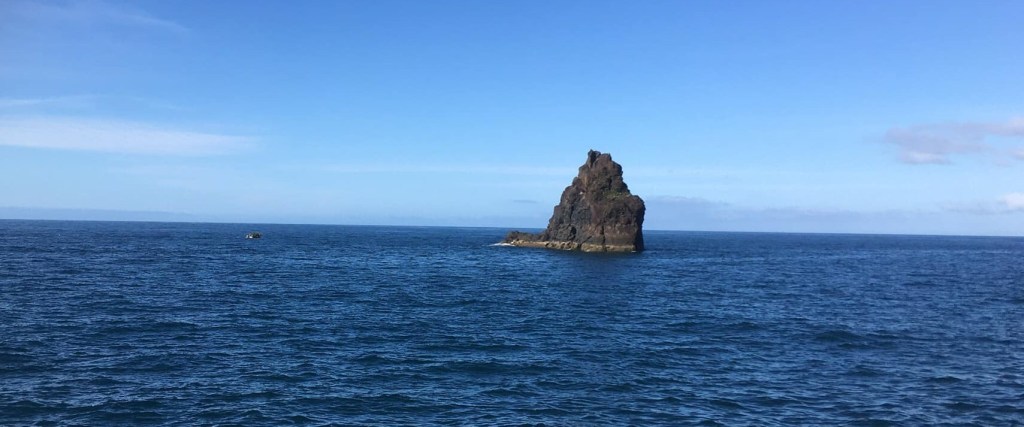
The ocean today was fairly calm, twenty degrees and a deep deep blue. It looked inviting on one level. The presence and manner of the lifeguard was comforting despite the fact that I would be beyond his assistance if I got into trouble. As I descended the ladder and entered the water I was not entirely convinced of the wisdom of this adventure but I felt OK. This wasn’t a race but this felt like pre-race nerves. I had however been to Praia Formosa surf beach the previous day and abandoned the idea of swimming there due to the size and intensity of the surf and the vicious undertow. This, however, was not Abersoch. One way was Africa, the other North America and the bottom was far, far below me. Oh and no safety boats.
The nature of fear
As I swam past the dock and into the open ocean heading for the island in the photo above, I realised I was scared. As I have said I am experienced long distance swimmer, I am also a trained diver and experienced sailor and kayaker. i am not new to the idea that the ocean must be respected and appropriate planning, skills and equipment are needed. In this situation I might have expected to feel trepidation but not this apparently irrational, unanchored fear. After all I felt strong and knew I had the skills to do it. The last time I felt like this, it was during an ocean kayaking expedition in Scotland aged 13 years. Then I wasn’t sure I had the skills and we were in big swells and a rising wind. On that day the group got me through.
I soon began to feel physically and mentally uncomfortable. I didn’t seem to be going anywhere and my goal seemed far away. I wanted to turn round. I realised I was scared. I also did not know why. I would have expected adrenalin but not this. I had a long way to go but turning round did not feel like an option. I struggled on for a while but it didn’t get any better, rather it got worse. I felt tired, a little helpless and at risk. I had felt this before in a small way while in a triathlon washing machine but not like this.
I had the presence of mind to be aware that the first step was to take back control of what I could and not worry about other things. I reasserted my breathing and did a body scan analysing my movement, how my body felt and where my head was at. I felt weak, un-co-ordinated and stressed. My breath had become shallow and rapid which affected my balance and sense of gravity as well as my stress levels. It was hard to hold any kind of reasonable swim rhythm, my technique was shot through. Using an open water style rhythm and technique is everything.
Breath and technique
I needed to forget the ultimate goal for a moment and focus on the basics. The core of this is a strong steady breathing rhythm….breath in to the belly, hold for a few seconds and slowly release one third and refill or rapidly release the rest and replace. A simple mantra and encouraging words helped to settle me down, but fearful thoughts were still in charge. As I regained composure it was easier to let fearful thoughts go, return to a clear mind and with a clear mind and focus on the process. When the lungs relink with core energy, stress is reduced. The rhythm immediately triggers muscle memory born of hours of practice. I was then able to trust this skilled habit and not overthink things. This would have drawn me back to where I had been earlier on. In swimming, breathing rhythm is inextricably linked to technique in a way not matched by any other sport except perhaps shooting. Strokes and kicks must be locked into your breathing. Calmer now and getting somewhere it is time to focus on the nuances of technique – is my form good? Are my hands meeting at the apex of the stroke creating the rudder? Are my kick, stroke and breathing in synch and how is my head position and glide angle? Are my catch and pull strong and under control? I monitored a few cycles. As I did so I felt it all slowly dialling back in. Training and muscle memory took over from fear. Now I could spot my destination and then check my form again. ”I’m feeling like I’m back on top of things, that’s better”, I thought. Now I returned to my breathing. Am I filling every possible cubic inch of my lungs, am I relaxed and is my rhythm tight and strong? Now I can make friends with the ocean – its power, depth and magnificence. I allowed myself to experience the feeling of the breath in my body and the water sliding cool and fast across my skin. First connecting with the water itself then connecting with what divers call ‘the blue’. That is the mesmerising foreverness of the ocean, its endless translucent but ultimately opaque blueness. It is an experience similar to lying on your back in the summer grass watching the blue of the sky deepen, yet you are actually within it. It is mesmeric. Only seconds have passed. The feeling of trusting my skills and strength together with the calmness of a good breath pattern and feeling strong in my environment is amazing. The fear has left me. Spot again… we’re on the right track. A slight change of direction to avoid the surf thundering on the island. Now, its time for a swim.
The swim
I’m having fun now and I’m soon passing the first island on my left staying far enough off shore to avoid the rollers but close enough to enjoy its volcanic cragginess and the sea birds perching on its many pinnacles.
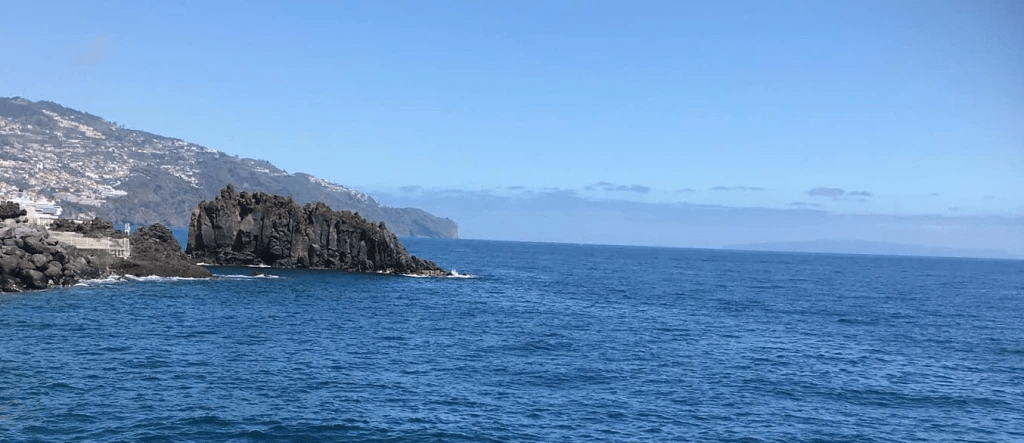
I feel a pang of primeval loneliness as I pass behind the island and out of sight of other humans and then pleasure turning round its seaward side and the sight of civilisation. The swim back past the dock and on to the second island to the west is beautiful. At the confluence of a quiet mind, solid rhythm, a strong and controlled technique and a steady breath I find, I think, ‘the zone’. I feel like I could be here all day. I am neither here nor not, both conscious and not conscious. Passing behind the eastern island some focus is needed to navigate the narrow channel on its landward side then its back to the open ocean, back in the zone. I barely notice the dock wall and ladder as I pass on my way to a second lap. Returning on the last leg after rounding the second island for the second time, demands a bit of work. Swimming in the ocean is far more demanding than on flat water despite the increased buoyancy from the salt water. In the UK, this effect is usually offset by a wetsuit. Climbing the ladder and onto deck above I feel fantastic. It was not just because of the great swim or the epic surroundings but because I had experienced fear, analysed what it was and been able to transcend it. I had applied specific mental and physical techniques to the problem and because of the quality of these I had made friends with the awesome ocean, albeit in a fairly good mood.
 The Endurance Horizon